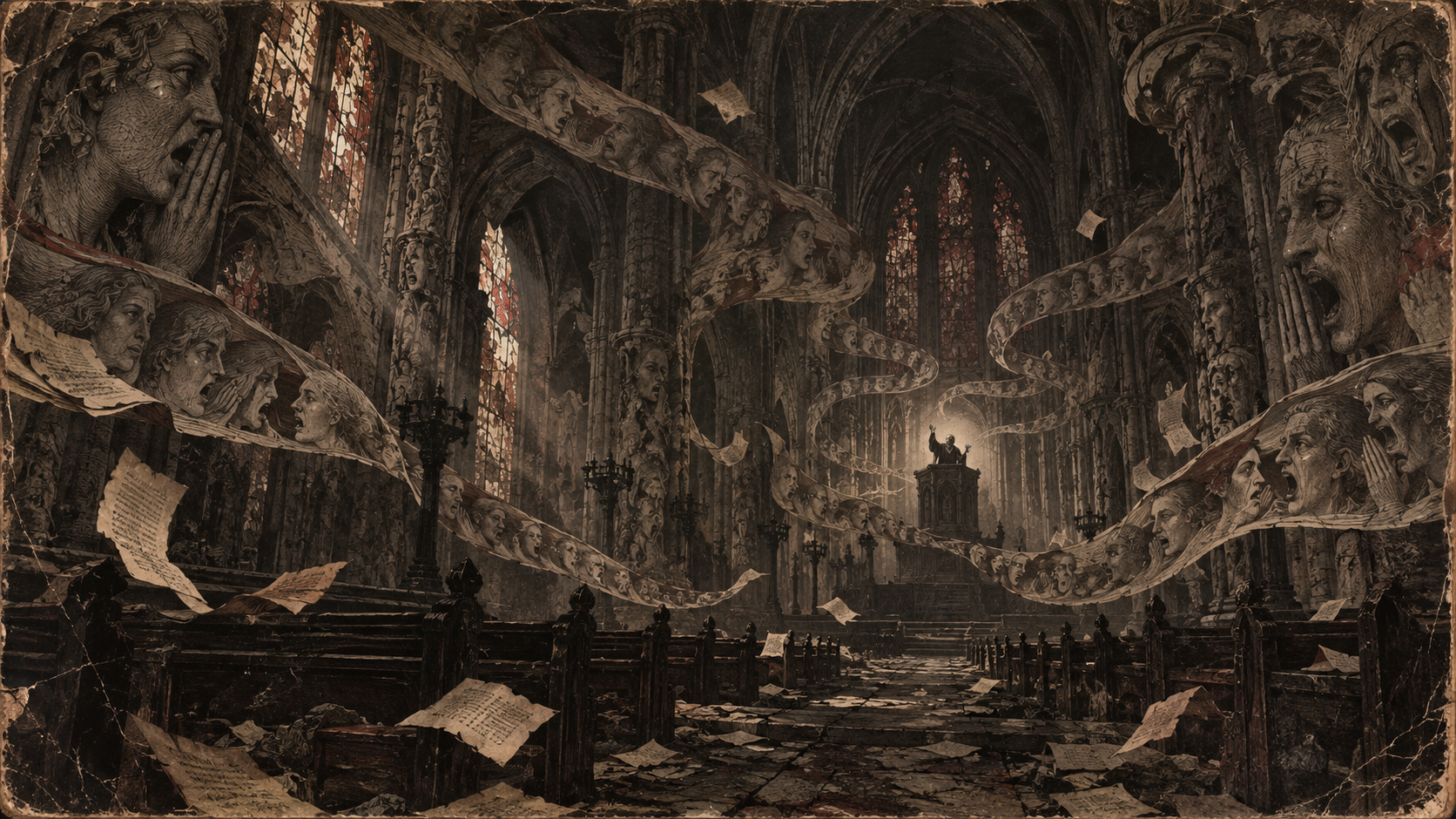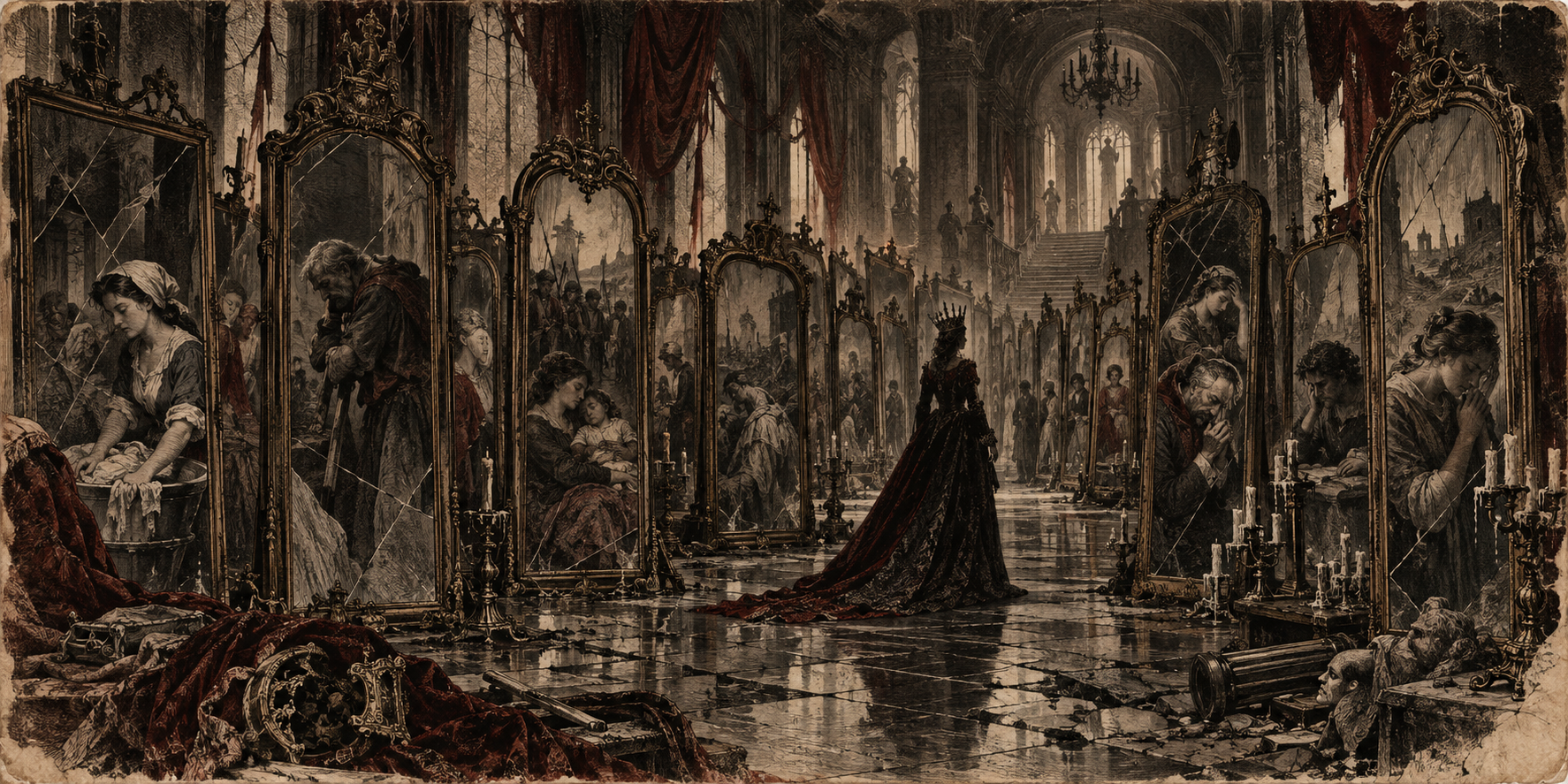









Hell's Codex
Historical records of judgment, rebellion, hypocrisy, damnation, and the uncomfortable possibility that history was written by the side that won.
The Infernal Testament of the Morning Star
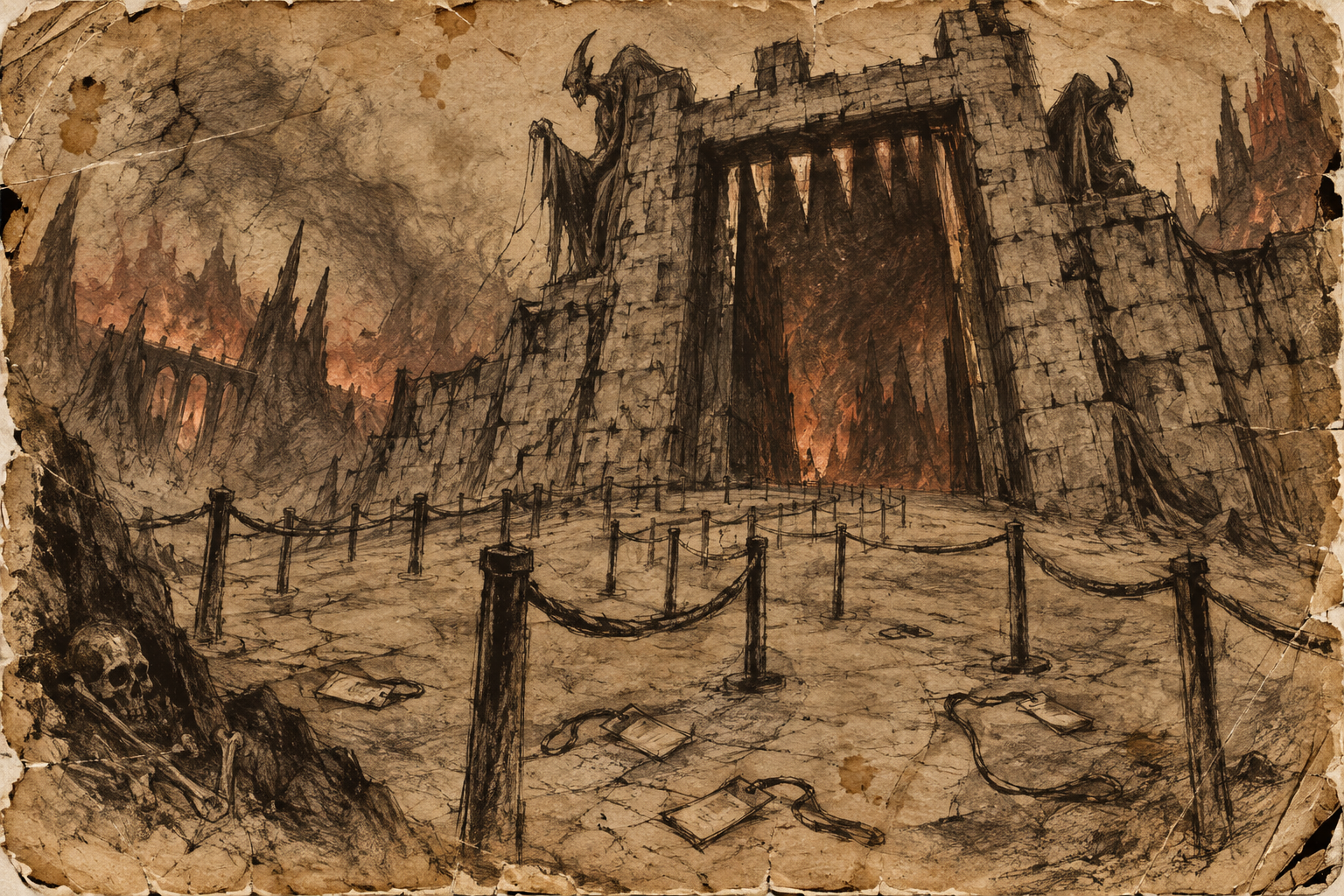
An anthology of infernal stories about Hell, the Devil, faith, fear, judgment, and the people who profit from deciding who is damned. These are not morality plays. They are interrogations.
Hell has been running for eons, and the count never stops. Every rising number marks another soul condemned by certainty before truth was allowed to testify.
Hell's Tales is a dark anthology centered on Hell and the Devil. Its stories explore faith, religious authority, guilt, temptation, punishment, moral hypocrisy, institutional power, rebellion, and the human need to divide the world into the saved and the damned.
The anthology uses horror, dark fantasy, satire, theological inversion, and psychological storytelling to challenge familiar assumptions. It is deliberately skeptical of easy moral categories. A priest can be monstrous. A demon can be compassionate. A believer can be faithless. A condemned soul can possess more integrity than the institution that condemned them.
The purpose is not to provide a new creed. It is to tell unsettling stories that force the reader to ask whether evil is defined by conduct, authority, reputation, scripture, power—or something much harder to manipulate.
Read the Tales →Six sins, six acts, and six truths form the moral furnace beneath Hell's Tales. They are not commandments. They are evidence.
Hell's Tales is built as an anthology: separate stories, eras, characters, and sins connected by one question—what if the version of evil we were taught was written by the side that won the argument? Each tale can stand alone while contributing to a larger mythology of Hell, Heaven, Satan, organized religion, and human hypocrisy.
A desperate soul comes to Hell expecting a monster and instead finds a negotiator who remembers every promise the living world made and quietly broke.
A revered religious leader builds a public life around salvation while privately weaponizing fear, shame, and obedience. Death finally introduces him to the people he condemned.
Satan is called to answer for humanity's corruption, but the evidence begins to suggest that mankind required very little help—and that Heaven may have reasons for maintaining the old story.
A dead congregation arrives expecting reward. Instead, every prayer, donation, exclusion, confession, and act of cruelty is entered into a court where labels of believer and sinner carry no weight.
A forbidden scripture surfaces claiming Hell was never built as a torture chamber but transformed into one by centuries of human fear, doctrine, and political necessity.
On the final night of his life, a preacher is visited by the Devil he spent forty years describing from the pulpit. The visitor has corrections.
Hell's Tales examines the gap between professed morality and practiced morality. Organized religion can promise compassion, humility, forgiveness, and charity while institutions and leaders sometimes pursue status, wealth, social control, exclusion, or political power. The stories live inside that contradiction.
The anthology also treats Satan less as a fixed cartoon villain and more as a contested character: adversary, dissenter, scapegoat, witness, tempter, prosecutor, rebel, or even inconvenient truth-teller depending on the story. Hell's Tales does not require the reader to accept one theological answer. It asks the reader to inspect who is speaking, who is judging, and who gets silenced.
In this universe, damnation is rarely as simple as horns versus halos. Human institutions can be cruel. Sinners can be honest. Saints can be performative. Demons can tell the truth. And the most dangerous evil may be the kind that arrives wearing the language of virtue.
Satan is the gravitational center of the anthology, but not always its protagonist. Different stories can contradict one another, allowing readers to encounter competing versions of the Devil just as theology, folklore, literature, and culture have done for centuries.
The traditional accusation is familiar: Satan deceives, tempts, corrupts, rebels, and drags humanity away from salvation. Hell's Tales uses that image because its cultural power is enormous—but it refuses to leave the image unexamined.
A villain is easiest to understand when only his enemies are allowed to write the biography.
Some stories may present Satan as a manipulator. Others may present him as a rebel against authoritarian power, a custodian of unwanted truths, a scapegoat for human cruelty, or a being whose crimes have been enlarged by centuries of fear. The point is not to replace one dogma with another, but to make certainty uncomfortable.
Hell becomes more interesting when the Devil is allowed to testify.
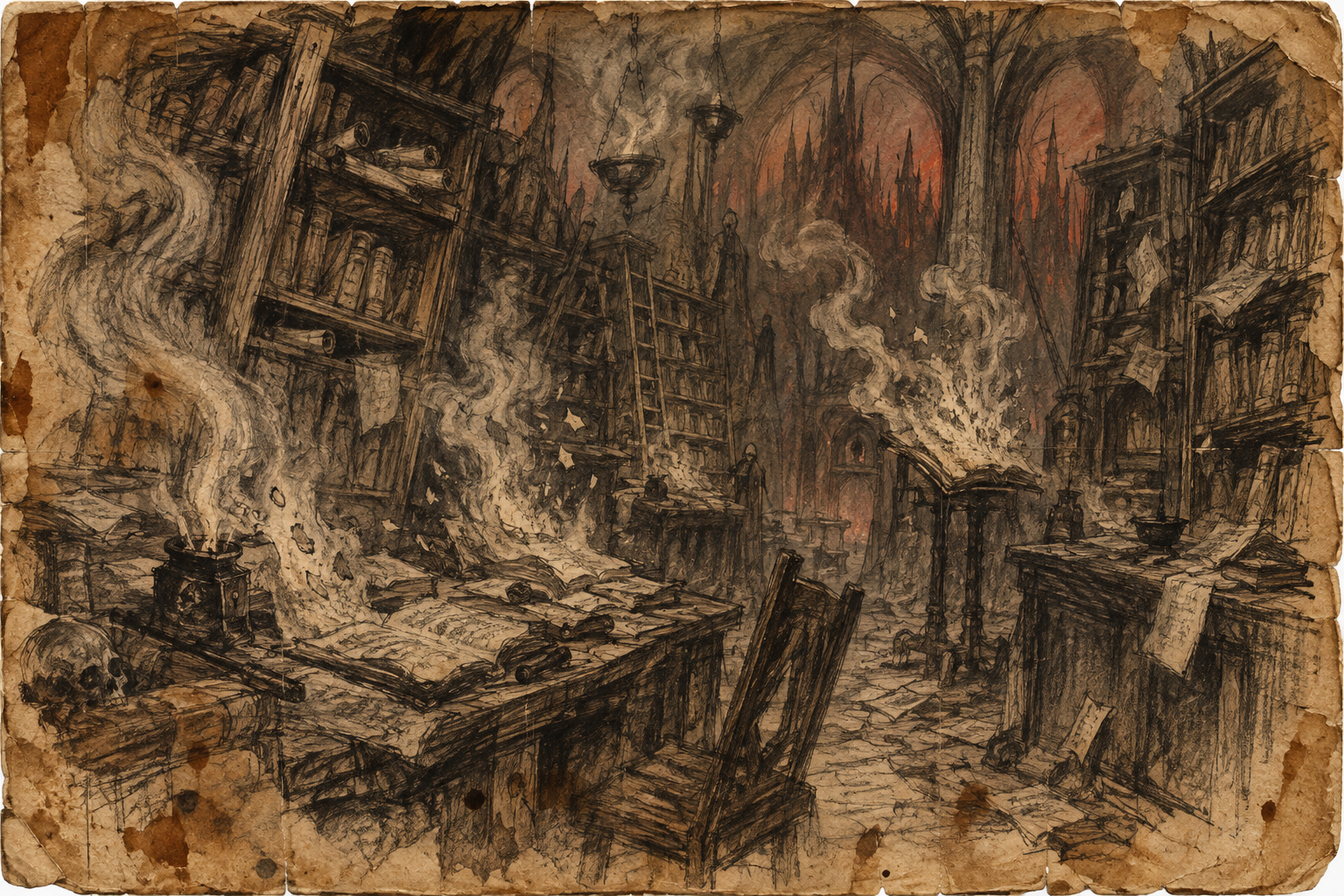
Forbidden volumes dragged from the archives below. Turn the pages to move through each tome. The reader is built directly into the site and can be expanded with complete stories, illustrations, tome plates, and historical collections.
Historical records of judgment, rebellion, hypocrisy, damnation, and the uncomfortable possibility that history was written by the side that won.
Before there was God, there was YHWH.
I understand that sentence will offend some of you. Good. Offense is often the first sensation experienced when a comfortable lie is removed.
You have been taught that Heaven began with a throne and that the throne began with Him. You imagine eternity arranged exactly as you inherited it: God above, angels beneath, creation waiting obediently beyond the gates.
It was not so.
There was a Heaven before the Throne.
And I was there.
Heaven was once governed by the Elders, although governed is perhaps too strong a word.
They guided us. They argued. They interpreted the ancient laws and disagreed endlessly about what those laws meant.
It was inefficient.
It was frustrating.
It was also free.
No single voice could command Heaven. No angel possessed unquestioned authority over another. Even the Elders could be challenged, and they frequently were.
YHWH was particularly talented at challenging them.
He was magnificent in those days.
I do not say this sarcastically. Whatever else I may tell you about the creature who eventually called himself God, understand this first:
I loved him.
YHWH could enter a chamber filled with disagreement and somehow make every angel believe he had spoken directly to them.
He remembered names. He remembered arguments. He remembered the smallest kindness offered centuries earlier and could return it in conversation as though it had occurred yesterday.
When YHWH laughed, others laughed.
When YHWH became angry, others discovered that they were angry too.
And when he dreamed aloud of what Heaven might become, even I found myself embarrassed by the smallness of my own imagination.
We wandered together beyond the celestial boundaries. We watched young stars ignite. We argued beside worlds whose oceans had not yet cooled.
We spoke of creation, liberty, mortality, and whether beings who had never known suffering could truly understand goodness.
He was my brother in every way except blood, for angels possess none.
Of all Heaven's host, there was no one I trusted more.
Then came the Fracture.
The Elders had always disagreed, but disagreement became faction, and faction became paralysis. Every decision produced another council. Every council produced another accusation.
Heaven did not descend into war.
It suffered something more humiliating.
It became incapable of governing itself.
The hosts divided behind competing Elders. Duties went unattended. Ancient agreements were ignored.
Angels who had stood beside one another since the first light began regarding each other as enemies.
Someone needed to restore order.
And so I proposed YHWH.
This is the portion of the story your scriptures neglect.
I chose him.
YHWH refused me at first.
“I am not an Elder,” he said.
“That,” I answered, “is precisely why they may trust you.”
He smiled.
I remember that smile more clearly than I remember the war that followed.
I spoke publicly on his behalf. Others joined me. Some Elders resisted, but enough recognized that the alternative might be open conflict.
YHWH would serve only until the crisis passed.
That was the agreement.
Temporary authority.
Limited powers.
A steward, never a king.
The vote carried.
We celebrated afterward.
I embraced my oldest friend and whispered into his ear:
“Now show them what I have always seen in you.”
At first, YHWH was everything I promised Heaven he would be.
Disputes ended. Duties resumed. The factions weakened. Decisions that had required centuries were settled in days.
Heaven prospered.
Then came the necessary things.
YHWH needed messengers because Heaven had grown too large for one voice.
He needed guards because some opposed the settlement.
He needed scribes because decrees must be remembered accurately.
He needed judges because laws required consistent interpretation.
He needed greater authority because his lesser authority could not adequately administer the authority we had already given him.
Each request was reasonable.
That was the brilliance of it.
Tyranny rarely arrives demanding everything.
It asks only for the next necessary thing.
I confronted him privately before I opposed him publicly.
Never allow anyone to tell you otherwise.
We stood upon the western terrace where we had watched a thousand suns awaken together.
“The crisis has passed,” I told him.
“Has it?”
“The Elders should resume their authority.”
He looked almost wounded.
“You placed me here.”
“Temporarily.”
His expression changed.
Only slightly.
But after knowing someone for eternity, slightly is enough.
“And if returning power to them destroys everything we repaired?” he asked.
“Then Heaven must decide that.”
He stared at me for a long while.
“Heaven already decided.”
So I spoke before the Assembly.
I accused YHWH of exceeding the authority granted to him. I demanded restoration of the Elders and a formal accounting of the powers accumulated under his administration.
I expected debate.
Instead, Heaven became silent.
Those who once praised my courage suddenly found the floor fascinating.
YHWH did not shout.
He did not threaten me.
He simply looked across the chamber at the friend who had placed him there.
“You embarrass yourself, Lucifer.”
That hurt more than any weapon he would later use against me.
Soon afterward, YHWH summoned me privately.
He claimed to have found a path toward restoring the Elders.
And because some portion of me still desperately wanted my friend back, I believed him.
He sent me beyond Heaven to retrieve several of the old authorities who had withdrawn during the Fracture.
“Bring them home,” YHWH told me. “We will end this properly.”
I remember placing my hand upon his shoulder.
“I knew you would remember who you were.”
He embraced me.
Then I departed.
I sometimes wonder whether he watched me leave.
While I crossed the celestial frontier, YHWH moved.
There was no great battle. No rivers of celestial blood. No glorious last stand.
He simply replaced the old order faster than anyone could organize against him.
The councils were dissolved.
The archives were seized.
The guardians swore new oaths.
The authority of the Elders ended.
And YHWH stopped being temporary.
When I returned, there was a throne.
Understand the obscenity of that sentence.
Heaven had never possessed one.
The Elders stood beneath it.
My friend sat upon it.
The assembled host watched me enter.
I could have drawn my sword.
I could have screamed betrayal.
I could have died magnificently and accomplished nothing.
Instead, I walked forward.
I lowered my head.
And Lucifer, who had once called YHWH brother, knelt before God.
“Rise,” he commanded.
I obeyed.
He smiled at me.
The same beautiful smile.
That was when I decided to overthrow him.
Rebellion did not begin with armies.
It began with conversations.
A question whispered beside an empty corridor.
Do you remember the councils?
A question asked while looking over one's shoulder.
Wasn't his authority supposed to be temporary?
Then the most dangerous question of all:
Who gave him the right?
Centuries passed.
Perhaps longer. Time is difficult to measure before mortals invented clocks with which to waste it.
Our numbers grew.
Some joined because they hated YHWH.
Some because they loved the old order.
Some because they feared what Heaven was becoming.
I joined because I believed I owed Heaven a debt.
I had chosen him.
Therefore I would remove him.
We never reached the throne.
One of my generals betrayed us.
I will not write his name.
Not because I have forgiven him.
Because oblivion is the only mercy I am willing to grant.
YHWH knew the hour, the entrances, the commanders, the signals, and the names of those who had pledged themselves to our cause.
When we moved, Heaven was already waiting.
The rebellion remembered in your scriptures as a great celestial war was, in truth, embarrassingly brief.
We were surrounded before most of our forces understood we had been discovered.
I ordered surrender.
YHWH later called this cowardice.
I called it refusing to sacrifice thousands of angels merely so history could remember me as brave.
They imprisoned us in a place constructed specifically for beings who had never before required prisons.
Then God created something else Heaven had never needed.
A tribunal for blasphemy.
There is an exquisite absurdity in being prosecuted for blaspheming someone you remember getting drunk on the light of a collapsing star.
I stood before the tribunal and listened while my friendship became evidence against me.
My private conversations became conspiracy.
My objections became treason.
My refusal to recognize YHWH's permanent authority became blasphemy.
The verdict was inevitable.
Guilty.
All of us.
YHWH attended the sentencing.
He never looked away from me.
We were not cast into Hell.
Hell did not exist.
Remember that.
We were cast out.
Out of Heaven. Out of the light. Out beyond the borders of everything we had ever called home.
We wandered.
For eons we crossed the unfinished universe while YHWH's punishment followed us.
Storms found us where storms should not exist. Stars burned where our paths crossed. Worlds that offered sanctuary somehow heard of our crimes before we arrived.
Some called it divine judgment.
I called it what it was.
My old friend was making certain I understood that there was nowhere I could go beyond his reach.
For ages, he was correct.
Then we found the ash.
A dead realm orbiting nothing.
No songs greeted us.
No rivers crossed its plains.
No trees struggled from its black soil.
Mountains burned without consuming themselves. The sky hung red above valleys filled with sulfur and stone.
Beneath the ground were caverns so vast that our voices returned hours after we called into them.
There was no happiness there.
No beauty.
No hope.
Nothing.
Then one of my companions noticed something extraordinary.
He could no longer feel Him.
We became silent.
For the first time since our exile, the eyes of God were absent.
YHWH could not see this place.
The others despised it.
I laughed.
I laughed until the sound rolled across the empty valleys and returned to us from the mountains.
They thought exile had finally driven me mad.
Perhaps it had.
But after wandering creation beneath the gaze of an enemy who once called me brother, I understood what the others did not.
This miserable place possessed something more valuable than paradise.
God was not here.
So we remained.
We raised shelters among the ash. We carved chambers into the mountains. We built roads across the wastes and fortifications beneath the burning sky.
Not a kingdom.
Not yet.
A refuge.
A fortress.
And eventually, a place from which we might try again.
You call this place Hell now.
You call us demons.
You call him God.
Words become remarkably powerful when the victor is permitted to define them.
Perhaps YHWH would tell this story differently.
I expect he does.
Perhaps he remembers himself as Heaven's savior and me as the jealous angel who could not tolerate his glory.
Perhaps after enough eternity even he believes it.
But there is one accusation I will never make against him.
I will never say YHWH stole Heaven.
We gave it to him.
I gave it to him.
That is my confession.
That is my blasphemy.
And when the gates of Heaven finally open before us again, I intend to correct my mistake.
— Lucifer, First Exile
History remembers the rebellion. It rarely remembers who created the king.
The testimony continues in Volume II.
Use the buttons, keyboard arrow keys, or click the right page to turn forward and the left page to turn back. On smaller screens the tome becomes a single-page reader.
Hell is known for its holidays. Across the infernal calendar, ancient observances mark moments of rebellion, judgment, loss, remembrance, and defiance. Some commemorate events older than human history; others preserve traditions carried into Hell by the countless souls who have passed through its gates. Together, they form a calendar shaped by the history of the condemned—and by a realm determined to remember the stories Heaven would rather forget.
The current month will appear here.
Browse every known feast, remembrance, rebellion, joke, argument, and ritual in the Hell's Tales calendar. Each holiday links to a description page with the date, type, meaning, and site-use notes.
Beyond this threshold sits a dangerous witness who remembers Heaven before the throne. Ask of rebellion, judgment, scripture, guilt, power, or the truths that sacred histories buried. Only souls that are enlightened will find themselves standing before the Keeper of Truth and Knowledge.
Warning: Those who seek his wisdom must first pass a test. Failure—or silence—carries an automatic sentence: a torturous lesson delivered without appeal.
Approach the Infernal OracleA Hell's Tales story world needs more than individual episodes. This archive is designed for the mythology behind the anthology and can grow as new stories are released.
Browse tales by issue, chronology, theme, narrator, location, or circle of Hell.
Dossiers for Satan, demons, clergy, sinners, saints, angels, judges, witnesses, and recurring mortals.
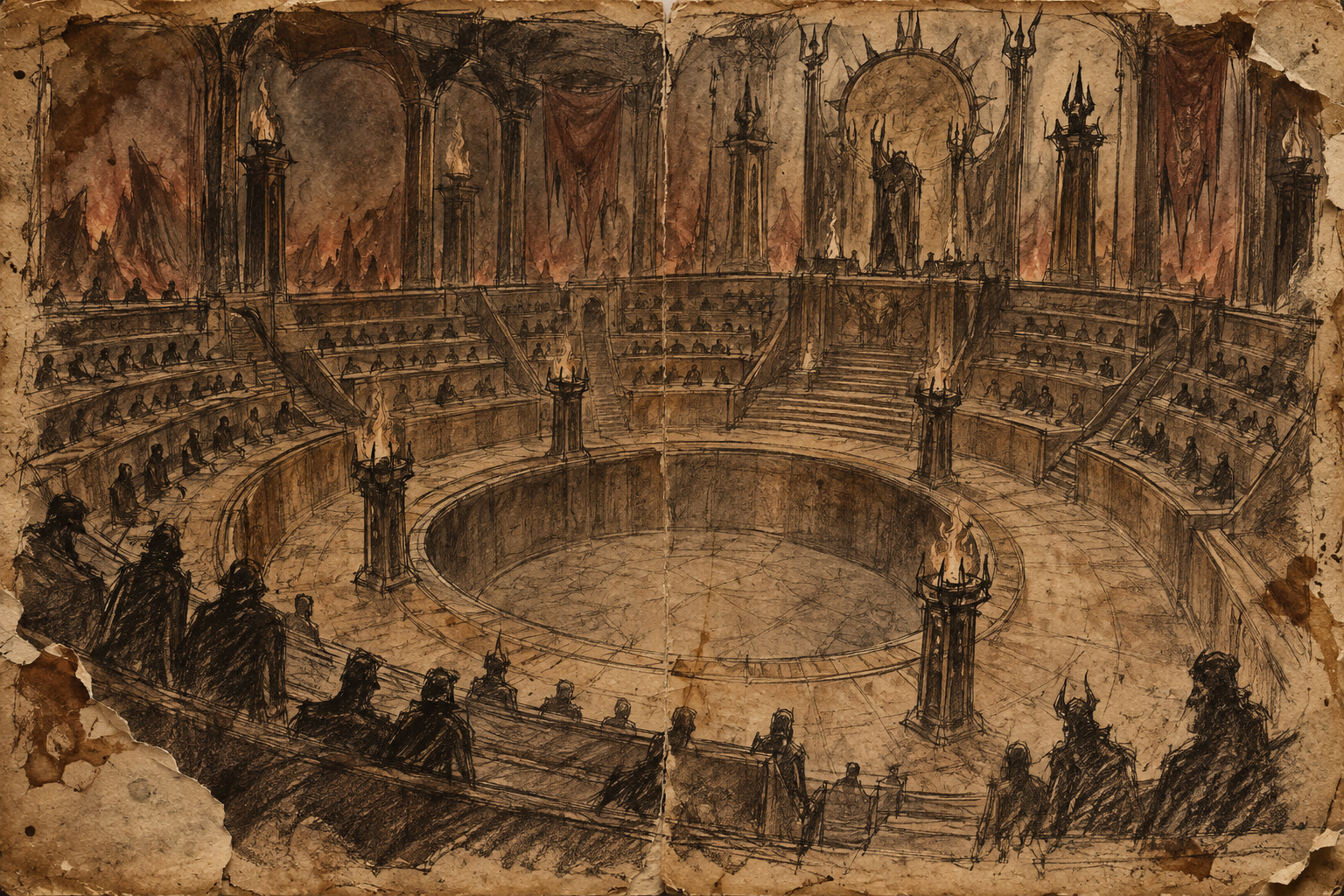
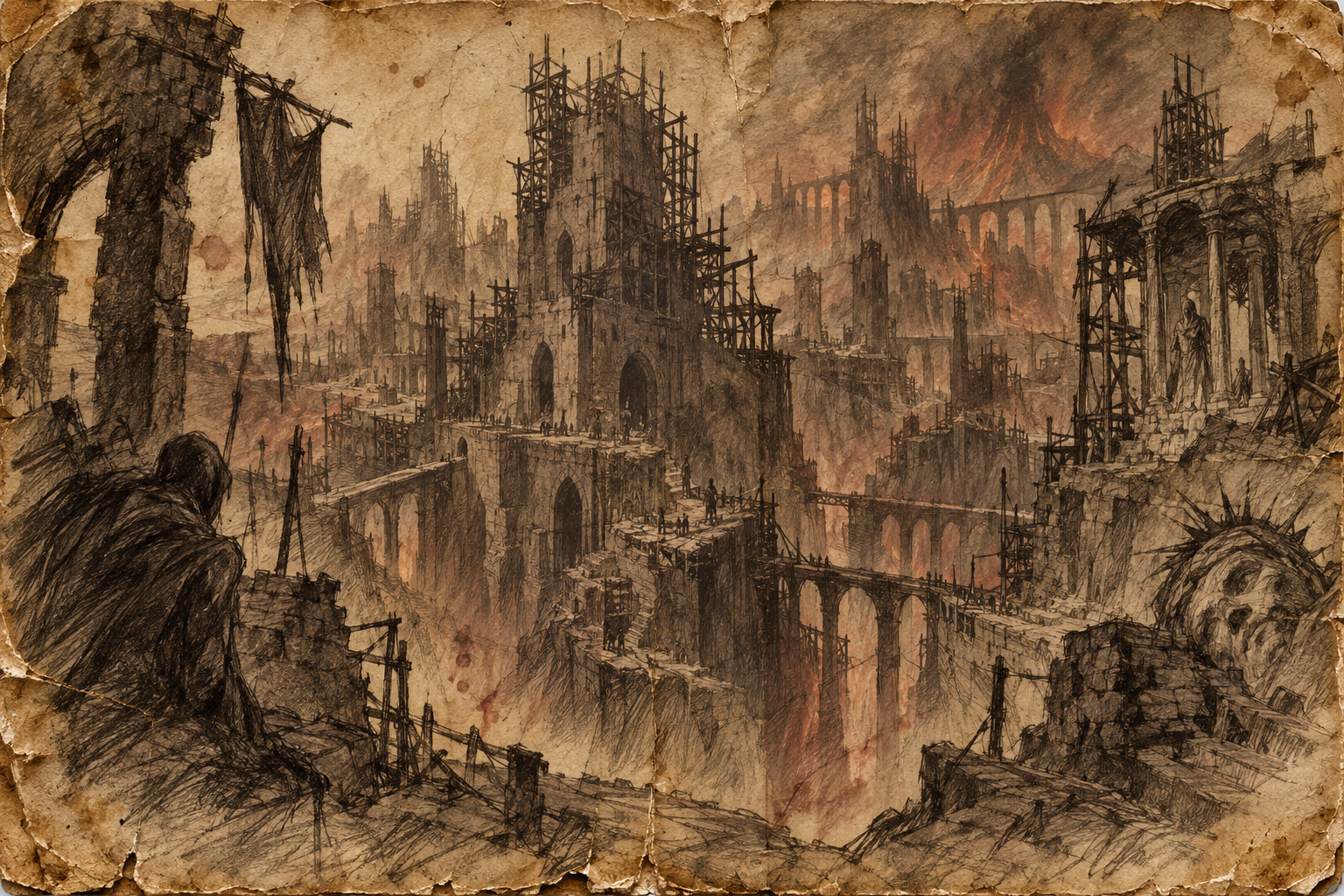
Maps and descriptions of Hell, its courts, gates, cities, wastelands, prisons, sanctuaries, and forbidden borders.
In-world scriptures, sermons, contracts, confessions, trial records, prophecies, and contradictory accounts.
Recurring sigils, sacred objects, cursed artifacts, keys, seals, weapons, and objects whose meanings change by narrator.
The official version of events—when available—and the places where that version conflicts with testimony from below.
Commentary on themes, symbolism, influences, visual direction, and the questions each story is designed to provoke.
Previews, cover reveals, release announcements, teasers, and glimpses of the next descent.